- Home
- Free guides
- Money
20 Money Saving Tips for Students and Housewives in India (Simple & Practical)
The fastest way to save money is to see where it goes: check one month of UPI and bank statements, set a simple budget, move savings out on day one, wait 24 hours before buying wants, and cut unused subscriptions.

- Small UPI payments are the most common money leak.
- Save first, spend the rest – automatically.
- Build an emergency fund before investing.
These money saving tips don't need a big salary – they work for students on pocket money and homemakers managing the family budget.
1–5: Know where money goes
- Download last month's bank and UPI statements.
- Put every spend into 6–8 categories.
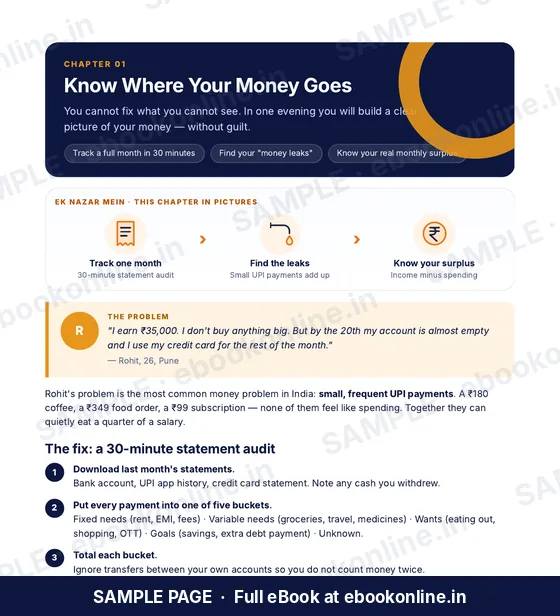
- Find the leaks – ₹50–₹200 UPI payments add up.
- Write your surplus: income − spending.
- Check spends for 10 minutes every Sunday.
Download last month's UPI statement and total every payment under ₹200. That number is your first saving target.
6–10: A budget that fits real life
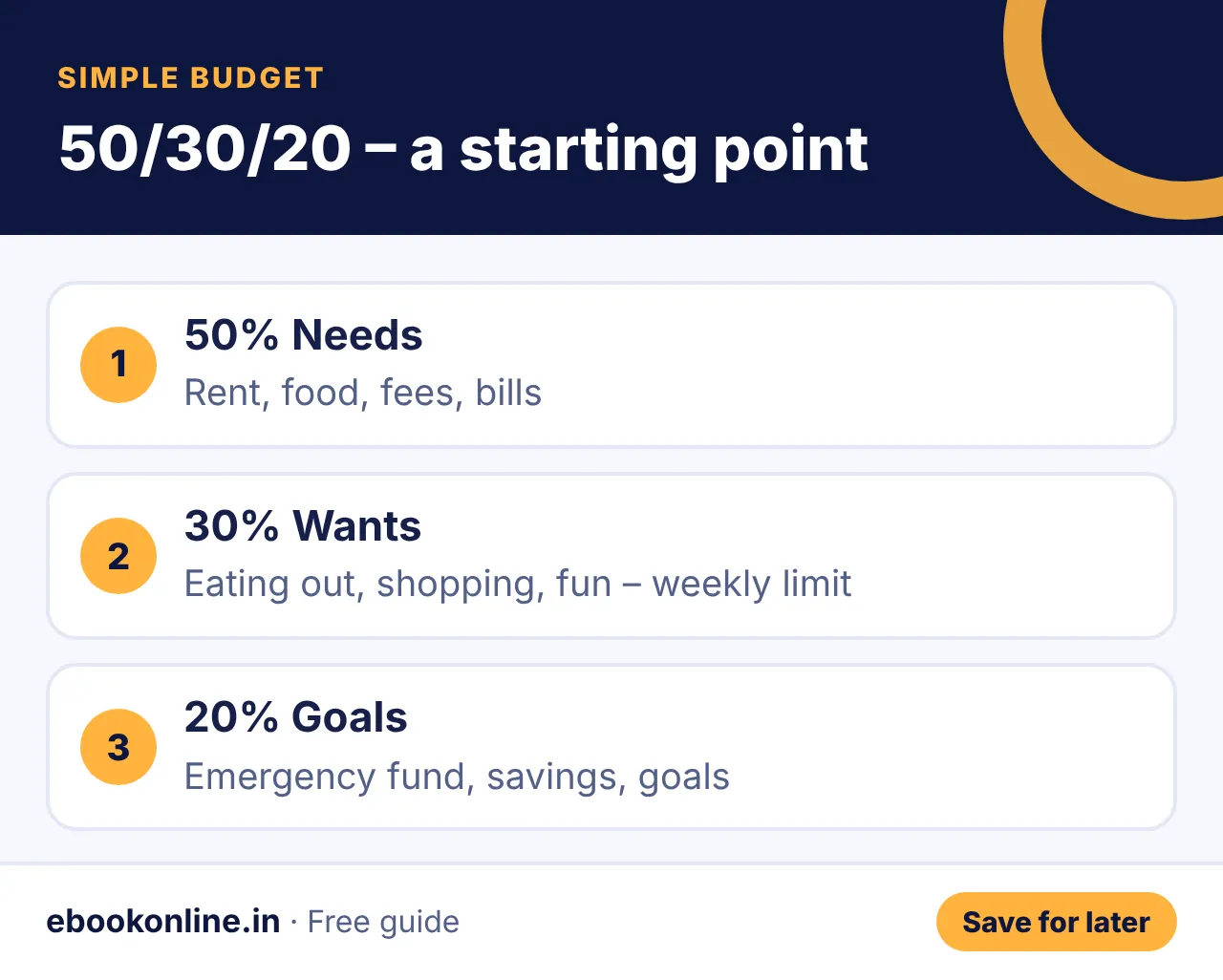
- Use 50/30/20 (needs/wants/goals) as a starting point, not a rule.
- Give "wants" a weekly limit.
- Keep a small buffer for surprises.
- Cancel subscriptions you haven't used in a month.
- Plan big yearly costs (fees, festivals) as small monthly amounts.
11–15: Make saving automatic
Show as text
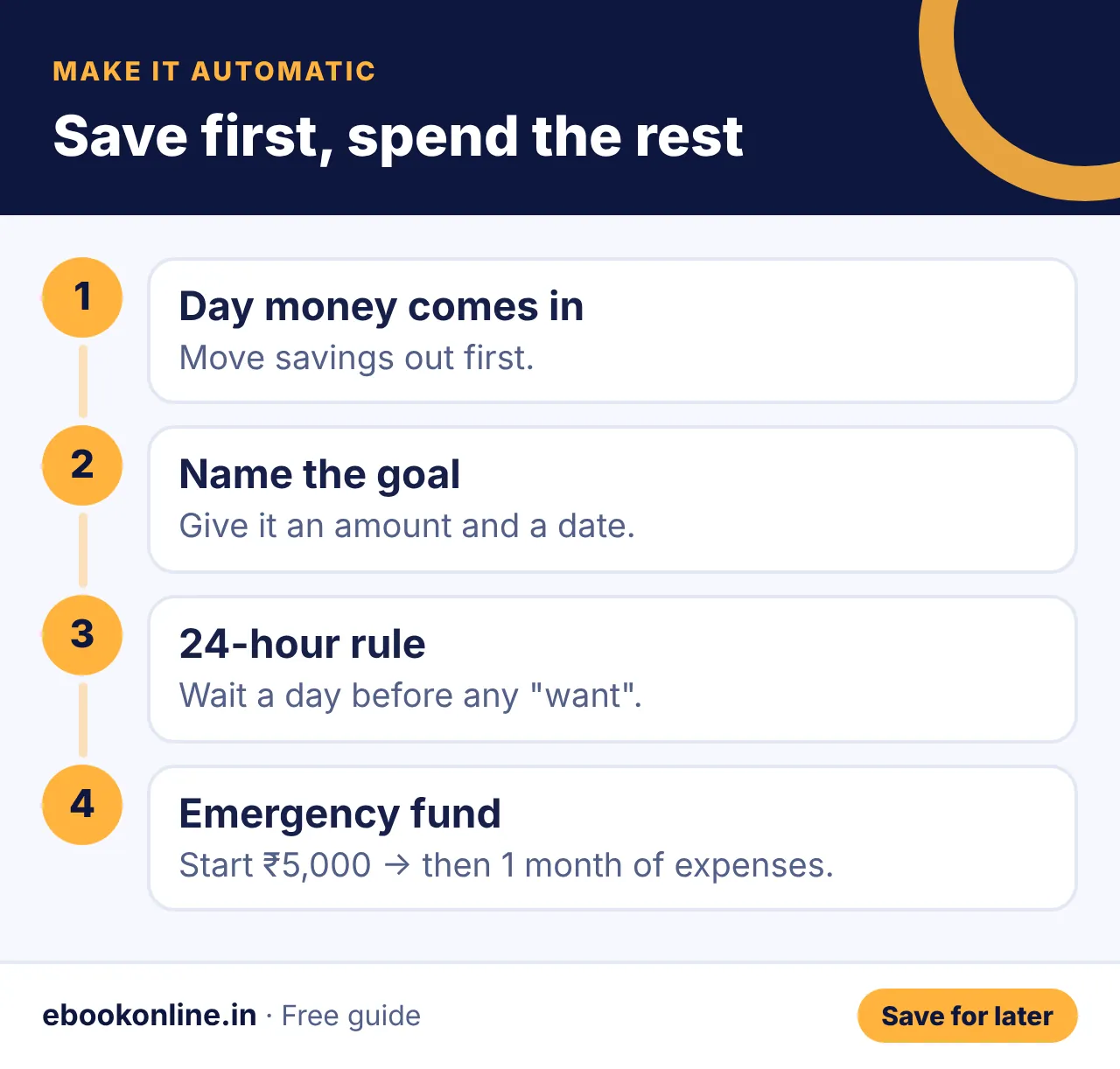
- Move savings on the day money comes in.
- Name each goal and give it a date.
- Wait 24 hours before buying any "want".
- Start an emergency fund with ₹5,000, then one month of expenses.
- Keep emergency money in a separate account.
16–20: Home and food savings
- Plan weekly meals and shop once – see our budget meal plan.
- Cook dal and rajma in a pressure cooker to save gas – whistle chart.
- Pack tiffins instead of buying lunch – 30 tiffin ideas.
- Buy seasonal vegetables.
- Earn a little extra with a skill – 30 home business ideas.
You never enter a UPI PIN to receive money. If you are scammed, call your bank and the 1930 helpline at once and report at cybercrime.gov.in.
Example: Rohit's new budget
| Category | Before | After |
|---|---|---|
| Wants (delivery, shopping) | ₹9,000 | ₹4,400 |
| Unknown small UPI | ₹2,000 | ₹0 |
| Emergency fund | ₹0 | ₹3,000 |
| Buffer for surprises | ₹0 | ₹1,000 |
He didn't cut needs – he only trimmed wants and moved savings out on salary day.
Track your monthly savings rate with the percentage formula in Excel. Earn a little extra with freelancing or a home business, and save on food with the bachelor recipes if you live alone. More: Career & Money eBooks.
A look inside the eBook: Money Basics for Beginners
This article covers the basics. The full eBook goes step by step – these are real sample pages from the 35-page PDF. Tap any page to see it bigger.



What you get for ₹99
- 10 chapters: budget, emergency fund and saving goals
- Getting out of costly debt and basic insurance
- Investing ideas without the hype
- Scam protection and money with irregular income
- 35-page PDF · read on phone or print at home · instant download after payment
Coming soon.
Frequently asked questions
How can a student save money?
Track pocket money for a month, set a weekly limit for wants, avoid small daily UPI spends and save part of any money you receive on day one.
What is the 50/30/20 rule?
A simple starting budget: about 50% for needs, 30% for wants and 20% for goals like savings. Adjust it to your city and family.
How much emergency fund should I keep?
Start with ₹5,000, then build to one month and later three months of essential expenses.
How can a homemaker save money monthly?
Track household spends for a month, plan weekly meals, set a weekly limit for wants and save a fixed amount on the day money comes in.
Is the 50/30/20 rule good for India?
It is a useful starting point. In big cities needs can be higher, so adjust the percentages to your situation.