- Home
- Free guides
- Recipes
Pressure Cooker Me Kitni Seeti? Whistle Chart for Dal, Rice, Rajma, Chole & Aloo
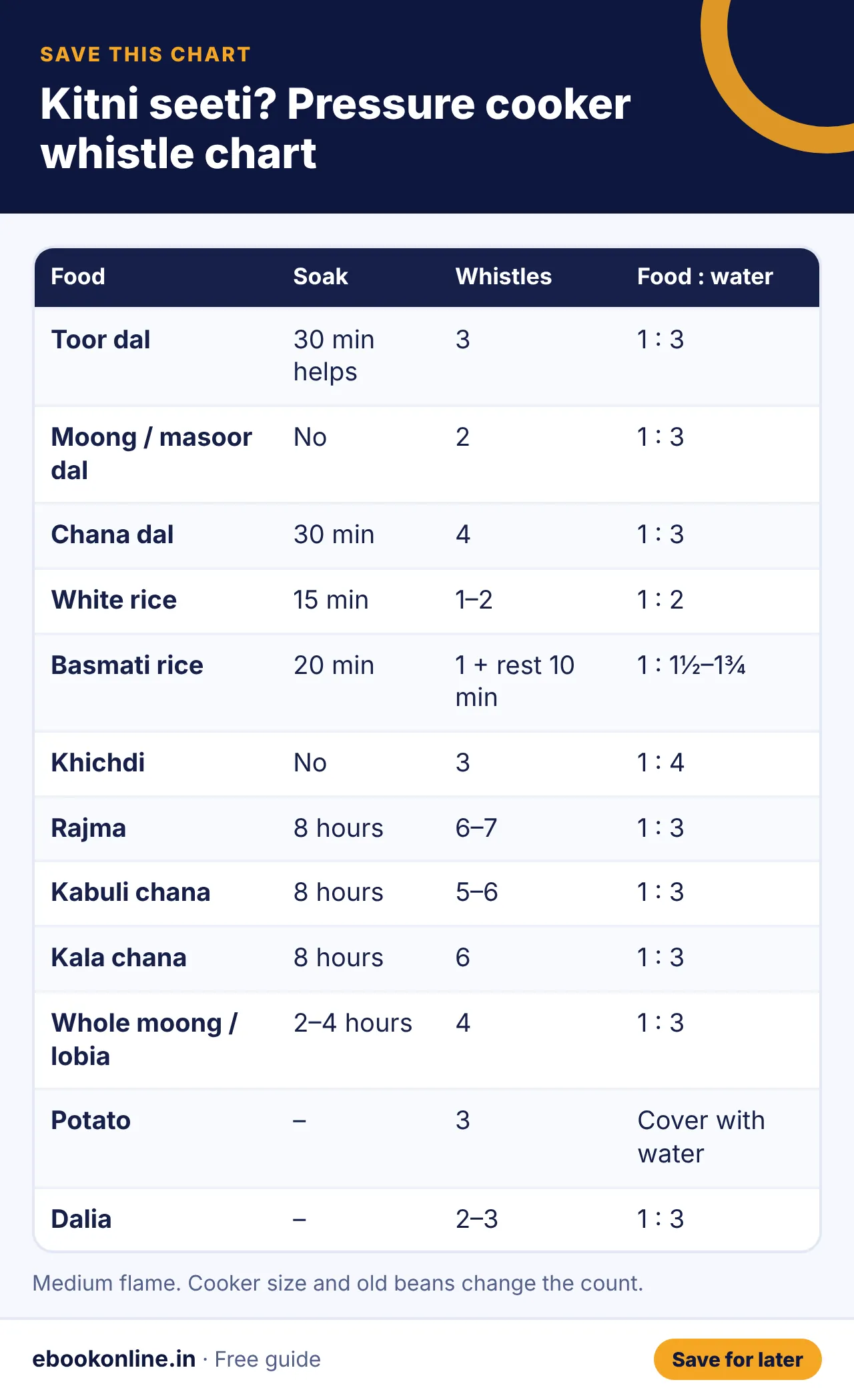
As a rule of thumb on medium flame: moong or masoor dal 2 whistles, toor dal 3, white rice 1–2, khichdi 3, kabuli chana 5–6 and rajma 6–7 after soaking. Water is usually 1:3 for dal and beans and 1:2 for rice.

- Dal: 2–4 whistles with 1:3 water.
- Rice: 1–2 whistles with 1:2 water; basmati 1 whistle and rest 10 minutes.
- Rajma and chole: soak 8 hours, then 5–7 whistles.
"Kitni seeti?" is the most asked question in Indian kitchens. This pressure cooker whistle chart gives you a starting point for everyday dal, rice and beans on medium flame. Cooker size, flame and the age of your beans change the count, so adjust after your first try.
The whistle chart
Show as text
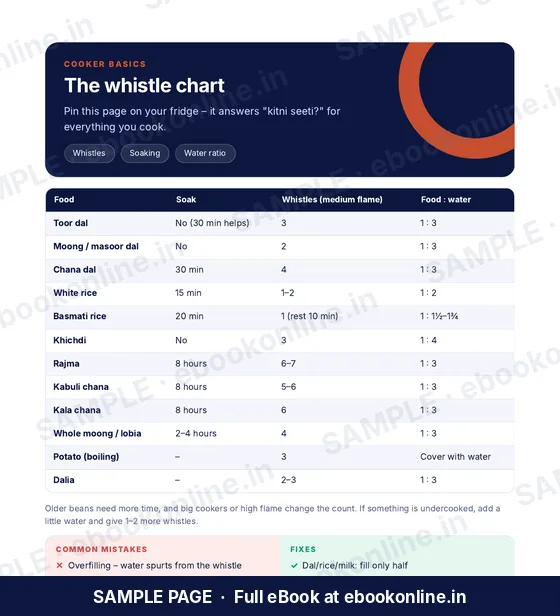
| Food | Soak | Whistles (medium flame) | Food : water |
|---|---|---|---|
| Toor dal | No (30 min helps) | 3 | 1:3 |
| Moong / masoor dal | No | 2 | 1:3 |
| Chana dal | 30 min | 4 | 1:3 |
| White rice | 15 min | 1–2 | 1:2 |
| Basmati rice | 20 min | 1 (rest 10 min) | 1 : 1½–1¾ |
| Khichdi | No | 3 | 1:4 |
| Rajma | 8 hours | 6–7 | 1:3 |
| Kabuli chana | 8 hours | 5–6 | 1:3 |
| Kala chana | 8 hours | 6 | 1:3 |
| Whole moong / lobia | 2–4 hours | 4 | 1:3 |
| Potato (boiling) | – | 3 | Cover with water |
| Dalia | – | 2–3 | 1:3 |
Older beans need more time. If something is undercooked, add a little water and give 1–2 more whistles.
Next time you cook dal, note the whistles and water you used. Adjust by one whistle next time if needed.
Common mistakes and fixes
| Mistake | Fix |
|---|---|
| Overfilling – water spurts from the whistle | Fill dal, rice and milk only up to half |
| Too little water – food burns | Always use at least 1 cup of water |
| Opening early – undercooked food, risk of burns | Let the pressure drop naturally |
| Loose gasket – steam leaks, no whistle | Replace the gasket every 6–12 months |
Save gas with separators
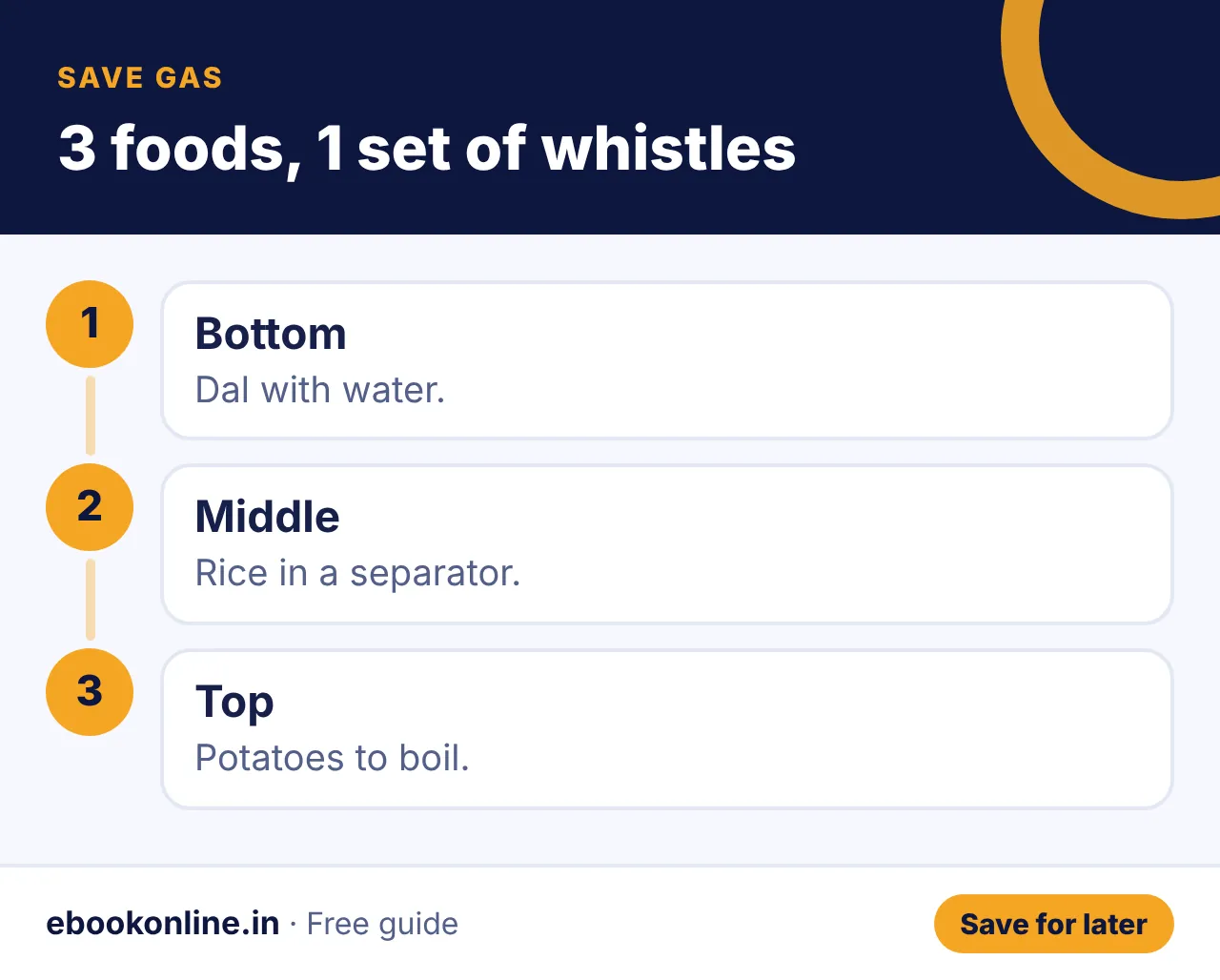
Stack containers: dal at the bottom, rice in the middle and potatoes on top – three items with one set of whistles. This is how many of the meals in our budget meal plan stay cheap.
What to cook next
- Dals: Dal Fry, Moong Dal Tadka, Sambar, Dal Palak
- Rice: Veg Biryani (Cooker), Jeera Rice, Masala Khichdi, Lemon Rice
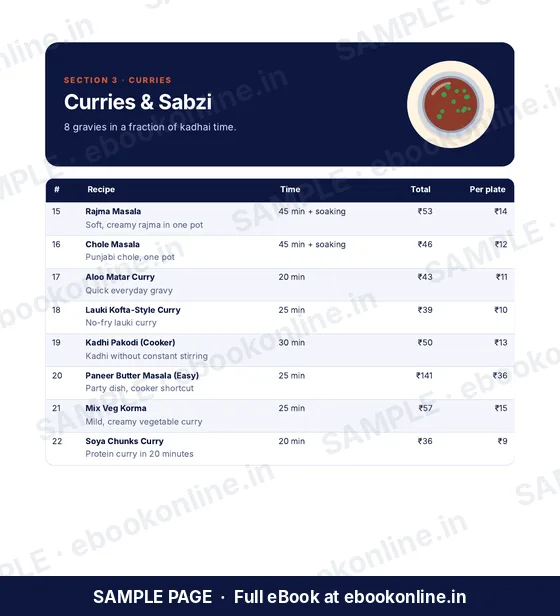
- Curries: Rajma Masala, Chole Masala, Paneer Butter Masala, Kadhi Pakodi
- Sweets: Rice Kheer, Suji Halwa, Cooker Chocolate Cake
Always follow your cooker's manual. Never force the lid open and keep the vent and safety valve clean.
Flame and cooker size matter
- High flame gives whistles faster but food may stay undercooked inside.
- Big cookers need more water and sometimes one extra whistle.
- Hard water and old beans take longer – soak well.
One-pot meals you can cook today
- Masala khichdi – 3 whistles
- Veg biryani in the cooker
- Rajma masala after soaking overnight
- Rice kheer
Plan the week with our 7-day budget meal plan, pack lunches using 30 tiffin ideas, and if you live alone try bachelor recipes. More: Indian Recipe eBooks.
A look inside the eBook: Pressure Cooker Recipes
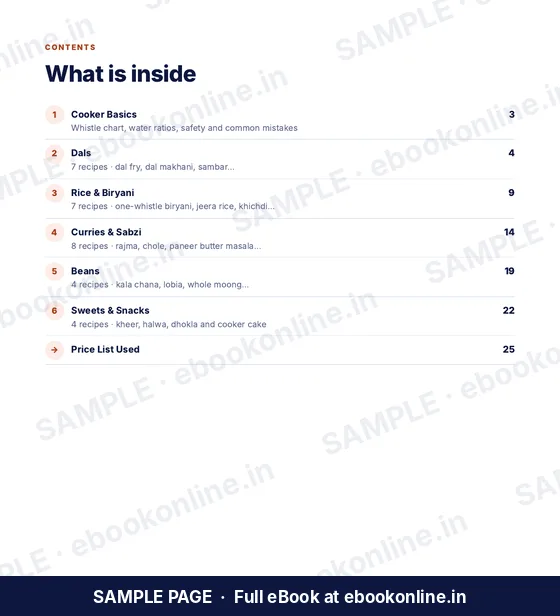
This article covers the basics. The full eBook goes step by step – these are real sample pages from the 26-page PDF. Tap any page to see it bigger.

What you get for ₹99
- 30 one-cooker dishes
- Whistle & water chart
- Cost of every dish
- Cooker Basics – Whistle chart, water ratios and safety.
- Dals – 7 recipes like dal fry, dal makhani and sambar.
- 26-page PDF · read on phone or print at home · instant download after payment
Coming soon.
Frequently asked questions
How many whistles for toor dal?
About 3 whistles on medium flame with 1 part dal to 3 parts water. Soaking for 30 minutes makes it softer.
How many whistles for rice in a cooker?
Usually 1–2 whistles for white rice with 1:2 water, and 1 whistle plus 10 minutes rest for basmati.
How many whistles for rajma?
After soaking for about 8 hours, rajma usually needs 6–7 whistles with 1:3 water.
Why is my cooker not whistling?
Usually the gasket is loose or worn, the lid is not closed properly, or there is too little water. Check the gasket and vent.
Can I cook dal and rice together?
Yes, using stacked separators: dal at the bottom and rice above, with one set of whistles.