- Home
- Free guides
- Health
Surya Namaskar Steps – 12 Poses with Names, Benefits & Tips
Surya Namaskar (Sun Salutation) is a flow of 12 poses that warms up the whole body in a few minutes. Here are all the Surya Namaskar steps with names, breathing and beginner tips.
- One round = 12 poses; a full set is two rounds (right leg first, then left).
- Inhale when you bend back or lift up, exhale when you bend forward or go down.
- Start with 2–4 slow rounds and add more slowly over weeks.
Surya Namaskar, or Sun Salutation, is one of the most popular yoga sequences in India. It links 12 poses with your breathing, and a few rounds can stretch and warm up the whole body. This guide explains all the Surya Namaskar steps with names, how to breathe in each pose, and how beginners can start safely at home.
Yoga is not a replacement for medical treatment. If you have a health condition, injury, high blood pressure, back problems, or are pregnant, ask your doctor before starting.
Before you start
- Practise on an empty stomach – early morning is ideal, or 3–4 hours after a meal.
- Use a yoga mat or a folded bedsheet on a flat floor.
- Wear loose, comfortable clothes.
- Warm up your neck, shoulders and wrists for 2 minutes.
Tomorrow morning, before breakfast, do just 2 slow rounds of Surya Namaskar following the table below. Notice how warm your body feels.
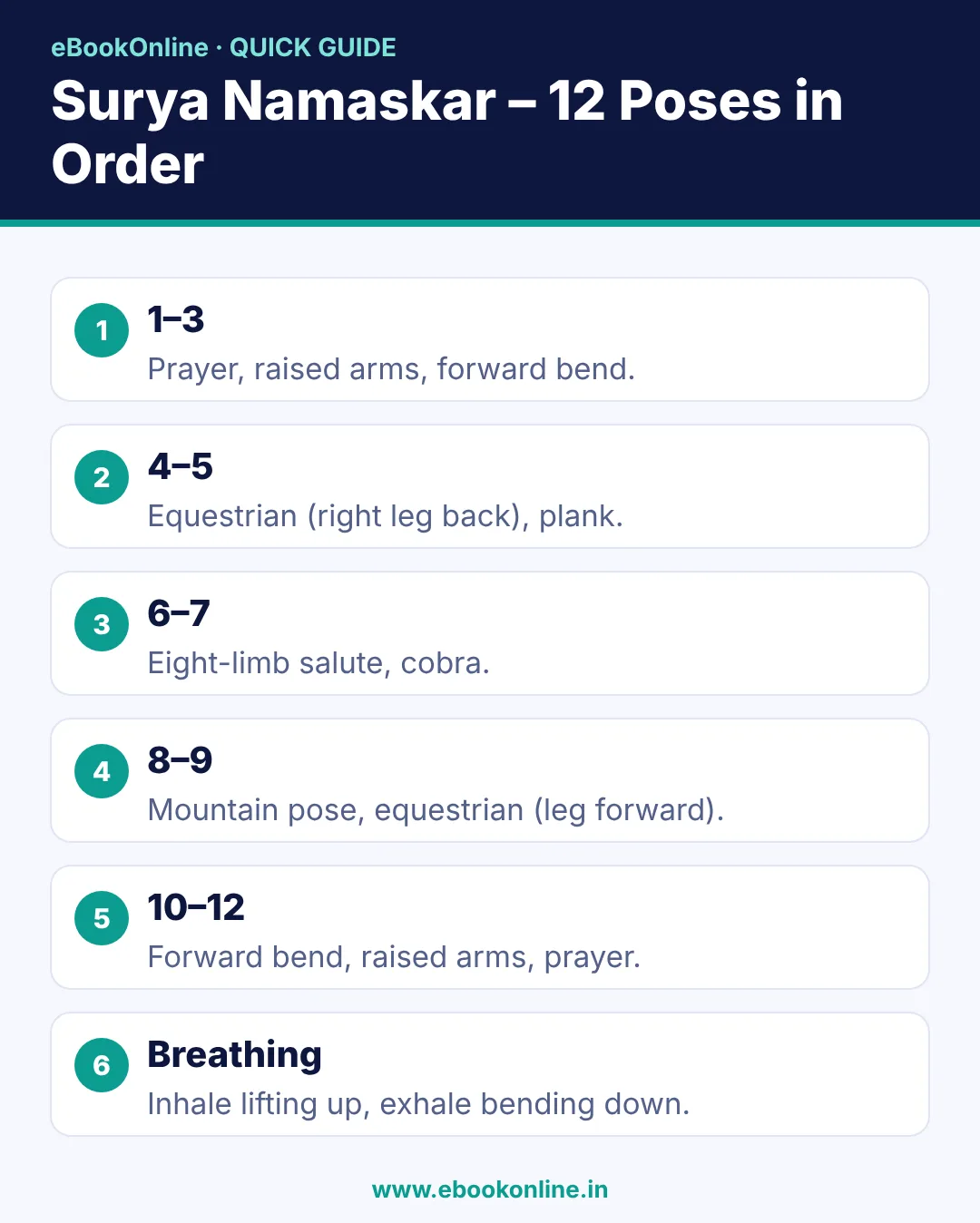
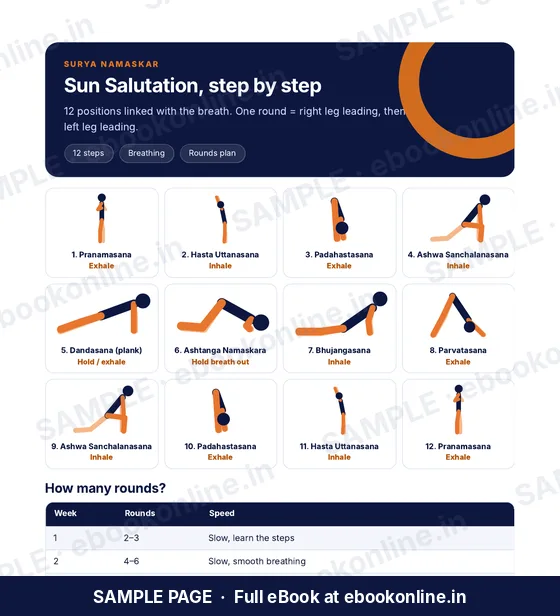
Surya Namaskar steps with names (12 poses)
| Step | Pose name | Breath |
|---|---|---|
| 1 | Pranamasana (Prayer pose) | Breathe normally |
| 2 | Hasta Uttanasana (Raised arms pose) | Inhale |
| 3 | Hasta Padasana (Standing forward bend) | Exhale |
| 4 | Ashwa Sanchalanasana (Equestrian pose, right leg back) | Inhale |
| 5 | Dandasana (Plank pose) | Hold breath or exhale |
| 6 | Ashtanga Namaskara (Eight-limb salute) | Hold or breathe out |
| 7 | Bhujangasana (Cobra pose) | Inhale |
| 8 | Adho Mukha Svanasana / Parvatasana (Mountain pose) | Exhale |
| 9 | Ashwa Sanchalanasana (Equestrian pose, right leg forward) | Inhale |
| 10 | Hasta Padasana (Standing forward bend) | Exhale |
| 11 | Hasta Uttanasana (Raised arms pose) | Inhale |
| 12 | Pranamasana (Prayer pose) | Exhale, relax |
Steps 9–12 repeat steps 4–1 in reverse order. In the next round, take the left leg back in step 4 and bring the left leg forward in step 9.
How to do each step
- Pranamasana: Stand straight with feet together. Join palms in front of your chest.
- Hasta Uttanasana: Inhale and lift your arms up and slightly back. Keep arms close to the ears.
- Hasta Padasana: Exhale and bend forward from the hips. Bring hands next to your feet. Bend the knees if needed – that's fine.
- Ashwa Sanchalanasana: Inhale and take the right leg far back, knee down. Look up gently.
- Dandasana: Take the left leg back too. Body straight like a plank, arms straight.
- Ashtanga Namaskara: Lower knees, chest and chin to the floor, hips slightly up. Eight points touch the floor: two feet, two knees, two hands, chest and chin.
- Bhujangasana: Inhale, slide forward and lift the chest like a cobra. Keep elbows slightly bent and shoulders away from ears.
- Parvatasana: Exhale, lift the hips up to make an upside-down "V". Try to bring heels towards the floor.
- Ashwa Sanchalanasana: Inhale and bring the right foot forward between the hands. Look up.
- Hasta Padasana: Exhale, bring the left foot forward and bend down.
- Hasta Uttanasana: Inhale, rise up and stretch the arms over your head.
- Pranamasana: Exhale, bring palms back to the chest and relax.
Surya Namaskar benefits
With regular practice, many people find that Surya Namaskar:
- Improves flexibility in the back, legs and shoulders.
- Builds strength in the arms, core and legs.
- Works as a full-body warm-up before other exercise.
- Helps them feel fresh and focused in the morning.
- Makes a habit of daily movement easier, since it needs no equipment.
Benefits come from regular, correct practice combined with good sleep, food and activity – not from doing many rounds in one day.
How many rounds should beginners do?
| Week | Rounds per day |
|---|---|
| Week 1 | 2–4 slow rounds |
| Week 2–3 | 4–6 rounds |
| Week 4 onwards | 6–12 rounds, if comfortable |
Go slowly and focus on form and breathing. Rest in a lying position for 1–2 minutes after finishing.
Common mistakes to avoid
- Rushing – speed causes injury; move with your breath.
- Locking knees in forward bends – keep a soft bend if hamstrings are tight.
- Dropping the hips in plank – keep a straight line.
- Lifting too high in cobra – don't strain the lower back.
- Holding the breath for long – breathe naturally if confused.
Make it a daily habit
Do your rounds at the same time each day, like right after brushing your teeth. For a full 15-minute routine with more asanas, read yoga for beginners at home, and see healthy habits for students for small daily habits that support it.
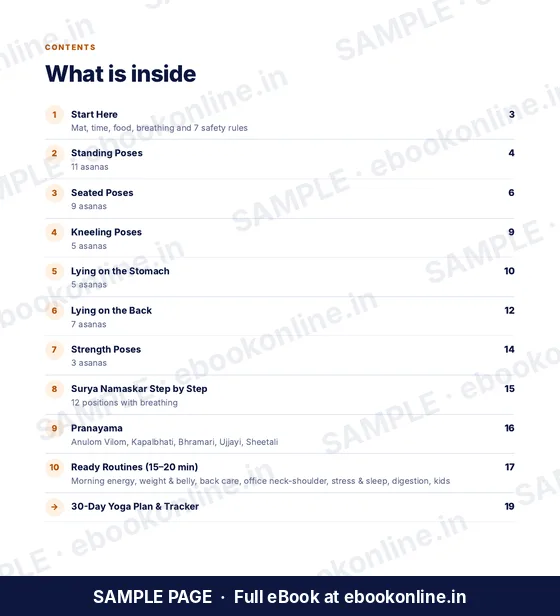
A look inside the eBook: 15-Minute Yoga at Home
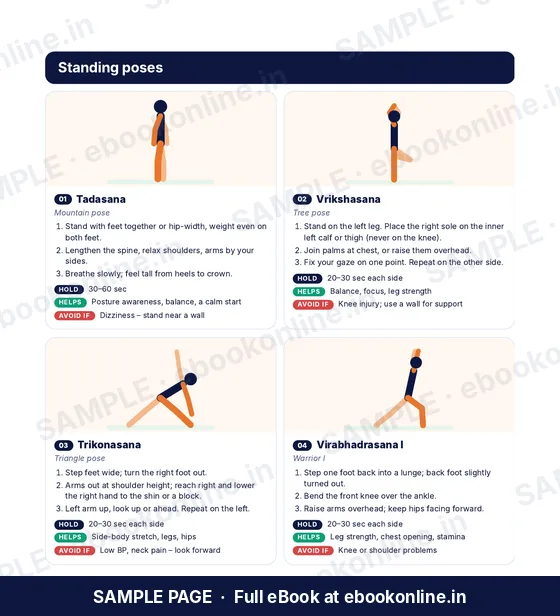
This article covers the basics. The full eBook goes step by step – these are real sample pages from the 20-page PDF. Tap any page to see it bigger.
What you get for ₹99
- 40 asanas with pictures
- 7 ready routines
- 30-day plan & tracker
- Start Here – Mat, time, food, breathing and 7 safety rules.
- Standing Poses – 11 asanas.
- 20-page PDF · read on phone or print at home · instant download after payment
Coming soon.
Frequently asked questions
What are the 12 steps of Surya Namaskar?
Pranamasana, Hasta Uttanasana, Hasta Padasana, Ashwa Sanchalanasana, Dandasana, Ashtanga Namaskara, Bhujangasana, Parvatasana, then Ashwa Sanchalanasana, Hasta Padasana, Hasta Uttanasana and Pranamasana.
How many rounds of Surya Namaskar should a beginner do?
Start with 2–4 slow rounds a day in the first week and add slowly. Focus on correct form and breathing.
What is the best time to do Surya Namaskar?
Early morning on an empty stomach is best. You can also do it 3–4 hours after a meal.
Who should avoid Surya Namaskar?
People with back or neck injuries, high blood pressure, heart problems, or pregnant women should ask a doctor first.
How should I breathe during Surya Namaskar?
Inhale when you lift up or bend back, and exhale when you bend forward or go down. Breathe normally if you get confused.